2026-05-11
El hot pot es un plato popular en todo el mundo, pero no todos los estilos son iguales. Dos de los más populares son el hot pot japonés y el hot pot chino. Si bien ambos implican cocinar los alimentos en la mesa, ofrecen experiencias gastronómicas muy diferentes.
Si estás planeando abrir un restaurante o buscando el lugar adecuado mesa de olla caliente En cuanto a la configuración, comprender estas diferencias puede ayudarle a elegir el equipo, la base de sopa y el estilo de restaurante adecuados para sus clientes.
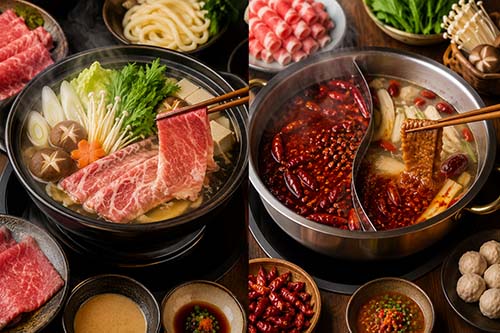
El hot pot japonés suele ser más ligero y de sabor más delicado. Se centra en ingredientes frescos, un caldo limpio y métodos de cocción sencillos.
Entre los estilos más populares de olla caliente japonesa se incluyen:
En los restaurantes japoneses de olla caliente, los comensales suelen cocinar finas lonchas de ternera, verduras, tofu, marisco y fideos en un caldo suave. Las salsas suelen ser sencillas, como la de sésamo o la ponzu.
El ambiente suele ser tranquilo, limpio y minimalista.
Muchos restaurantes japoneses optan por placas de inducción integradas. mesa de olla caliente Diseños que lucen modernos, ahorran espacio y crean un ambiente limpio para comer.
El hot pot chino es famoso por sus ricos sabores y su animado ambiente. Suele ser una experiencia más social e interactiva que el hot pot japonés.
Entre los estilos más populares de olla caliente china se incluyen:
El hot pot chino suele ofrecer caldos con sabores más intensos, una mayor variedad de ingredientes y más salsas para mojar. Los clientes suelen disfrutar de caldos picantes con chile, granos de pimienta y condimentos variados.
Los restaurantes también dan mucha importancia a la ventilación, ya que los sabores intensos de la olla caliente y el vapor pueden llenar rápidamente el comedor.
Muchos restaurantes chinos utilizan productos personalizados. mesa de olla caliente Soluciones con placas de inducción integradas y sistemas sin humo para mejorar la comodidad del cliente.
Ambos estilos son populares, pero la mejor opción depende de tu público objetivo y del concepto de tu restaurante.
La olla caliente japonesa es ideal para:
La olla caliente china es ideal para:
No importa qué estilo elijas, el correcto mesa de olla caliente Puede mejorar tanto la experiencia del cliente como la eficiencia del restaurante.
Tanto el hot pot japonés como el chino ofrecen experiencias culinarias únicas. El hot pot japonés se centra en la sencillez y la frescura, mientras que el hot pot chino ofrece sabores intensos y un ambiente animado.
Si planeas abrir un restaurante de hot pot, elegir el estilo adecuado y el mesa de olla caliente La configuración adecuada puede ayudar a crear una mejor experiencia para sus clientes y mejorar las operaciones del restaurante.
Ya sea que prefiera la elegancia japonesa o la emoción picante de la cocina china, los equipos de alta calidad para olla caliente desempeñan un papel importante en el éxito de un restaurante.

Si usted está buscando el equipo caliente del pote y del Bbq para su restaurante, después usted ha venido al lugar correcto. Tenemos durante varios años de experiencia profesional en cocina de inducción del pote caliente y los técnicos de la parrilla del Bbq y nuestros productos obtuvieron muchas patentes nacionales actualmente.
5F,Block16,Phase3,Tianfulai International Industrial City,Ronggui Town,Foshan City, Guangdong,CHINA.
Tel :
+86 13380500833Correo electrónico :
gl.zhang@cenhot.compor favor, siga leyendo, manténgase informado, suscríbase, y le invitamos a que nos diga lo que piensa.



Derechos de autor © 2015-2026 Cenhot Catering Development Co.,Ltd..Todos los derechos reservados.



 gl.zhang@cenhot.com